

Risk Management · 2025
In this section2 topics
Risk Management Policy & Plan
Policy & Plan Description
In today’s dynamic business environment, organisations are increasingly exposed to uncertainty arising from both internal and external factors. These uncertainties may lead to events that represent risks or opportunities. While risks may negatively impact the achievement of objectives, opportunities serve as key drivers that create and enhance corporate value. Therefore, risk management is a critical tool for identifying, managing, and mitigating risks, while enabling organisations to achieve their objectives and goals. Furthermore, risk management is an essential component of Good Corporate Governance and a foundation for Sustainability Development. It promotes transparency, efficiency, and accountability in all business processes, thereby enhancing the Company’s reputation and creating long-term value for stakeholders. The Company is committed to implementing these practices under the collective responsibility of the Board of Directors, management, and all employees.
The Company is committed to implementing comprehensive enterprise risk management across the organisation in accordance with good practices and international standards. The Company has adopted the Enterprise Risk Management – Integrating with Strategy and Performance framework developed by COSO (The Committee of Sponsoring Organisations of the Treadway Commission) as a guideline for managing risks. This framework serves as a tool in increasing the opportunity for business success while reducing potential failures, losses, and uncertainties in the Company’s performance.
The Company’s risk management covers all types of risks that may affect operations and the achievement of organisational objectives, including strategic, financial, operational, compliance, and sustainability-related risks, encompassing environmental, social, and governance (ESG) factors. Risk management is implemented based on fundamental principles that integrate risk considerations into corporate governance, strategic planning, and reporting processes at both operational and strategic levels. The Company manages risks through a systematic and consistent approach across the organisation. This approach involves ongoing review of activities, monitoring emerging or evolving risks, and flexible, timely responses to internal and external changes to create and protect long-term organisational values.
The Company’s risk management process comprises 8 interrelated components as follows:
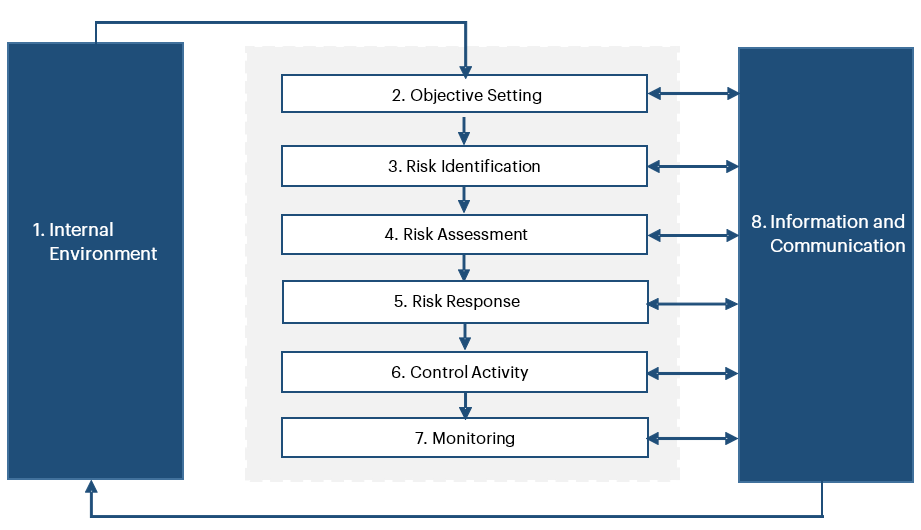
The Risk Management Section works closely with management and designated Risk Owners across all business units to assess risks and develop a comprehensive Risk Register. This process covers both corporate-level risks (Corporate Risks) and departmental-level risks (Departmental Risks), together with the formulation of appropriate risk mitigation plans. The effectiveness of risk management is continuously evaluated, with regular monitoring and reporting on the status of key risk issues and the progress of mitigation actions.
In addition, the Company has established its Risk Appetite, along with Key Risk Indicators (KRIs), to support effective risk monitoring and early warning mechanisms. These have been reviewed and approved by the Risk Management Committee, which has been delegated by the Board of Directors to oversee and supervise the Company’s risk management framework and activities.
Policy Document Link
https://investor.sansiri.com/storage/document/policy/enterprise-wide-risk-management-policy-en.pdf
Risks to the Company's Business Operations
Risk Register
| Risk Name | Risk Characteristics | Consequences | Management Measures | Related Risk Factors |
|---|---|---|---|---|
| Land Acquisition Risk | Land acquisition is a critical component of real estate development. The Company focuses on acquiring land plots with high development potential, particularly in areas supported by the expansion of transportation infrastructure and city development by both the public and private sectors, to support the development of residential projects at appropriate price levels. For condominium projects, the Company generally selects locations in mid-city areas or emerging urban zones with well-developed infrastructure and amenities that align with fundamental living needs. These locations are primarily situated along mass transit networks, including BTS Skytrain and MRT subway lines, as well as approved and ongoing extensions of such systems, with particular emphasis on locations near key transportation hubs, airports, community areas, business districts, educational institutions, commercial zones, and major tourist destinations. In addition, the Company prioritises land acquisition that supports innovative residential development concepts, integrating creativity, innovation, and advanced technologies to enhance the quality of living and daily convenience, while responding to evolving lifestyle needs of the new generation. | The Company remains exposed to the risk of limited land availability for project development in alignment with its strategic objectives, primarily due to rising land prices, scarcity of land in key business districts, and evolving land use regulations and urban planning requirements. | The Company has implemented the following risk management measures to mitigate risk:
| 746 · Description: Delays in the development of future projects · Info category: OPERATIONAL_RISK |
| Construction Material Price Volatility Risk | The Company faces risks arising from fluctuations in construction material prices used in real estate development projects, particularly key materials related to building structures and construction systems, such as cement, concrete products, wood and wood products, as well as electrical and plumbing materials. Prices of these materials have shown an upward trend, driven by higher raw material and production costs, together with increased demand from government infrastructure and public utility construction projects. At the same time, prices of certain construction materials, including steel, tiles, and sanitary ware, have declined due to external factors, such as excess steel supply in the global market resulting from the prolonged downturn in China’s real estate sector, as well as the slow recovery of the property market. Although the decline in prices of some materials has helped partially offset higher costs of key materials, construction material prices remain volatile and subject to various external factors. As a result, the Company’s project development costs continue to face uncertainty. | Fluctuations in construction material prices have a direct impact on project development costs, affecting the ability to control budgets and project profitability, particularly due to increases in the prices of key construction materials, which remain a major factor exerting pressure on overall project costs. | The Company recognises the risk arising from fluctuations in construction material prices, particularly in the case of price increases, and has implemented strict control measures as follows:
Expanding the network of business partners to support project growth. | 740 · Description: Shortage or fluctuation in pricing of raw materials or productive resources · Info category: OPERATIONAL_RISK |
| Risk of Economic Volatility and Competition | The Company faces risks arising from fluctuations in the global and Thai economies, which may affect foreign investment and domestic consumer purchasing power, intensify competition in the real estate market, and potentially result in project sales and profitability not meeting targeted objectives. Key risk factors include:
| These economic uncertainties have broadly impacted consumer purchasing power. Real estate is a high-value asset relative to income and requires substantial financial commitment. In this environment, consumers lack confidence in their future income, leading to hesitations and delays in real estate purchase or investment decisions, which may in turn affect project sales and profitability. | The Company closely monitors risks and continuously adjusts its strategies in line with market conditions and the current environment, while keeping track of evolving consumer behavior. The Company has optimised its investment portfolio to maintain a balanced mix between low-rise and condominium projects, offering developments across mid-to luxury segments to align with market demand. In addition, the Company carefully reviews plan for new project launches, focusing on market readiness and project preparedness, managing inventory at appropriate levels, and controlling internal costs and expenses to ensure competitive pricing. | 728 · Description: Volatility in the industry in which the company operates · Info category: STRATEGIC_RISK · 1725 · Description: Income volatility · Info category: FINANCIAL_RISK · 1715 · Description: Economic risk · Info category: STRATEGIC_RISK |
| Changes in Interest Rate and Foreign Currency Exchange Rate Risk | The real estate development business requires significant capital, and projects are typically executed over a period of 1–3 years. As a result, the Company faces risks from fluctuations in interest rates, which may directly impact on project profitability and financial costs. In addition, investments in overseas businesses expose the Company to foreign exchange risks, which must be managed continuously. | Fluctuations in interest rates and foreign exchange rates may increase the Company’s financing costs, affecting its ability to offer competitive pricing and impacting profit margins. In addition, exchange rate volatility is a key factor that creates uncertainty in revenues and costs from transactions arising from overseas investments, which may in turn affect Company’s financial performance. | The Company actively manages risks from interest rate and foreign exchange fluctuations through the following measures:
| 762 · Description: Change in financial and investment policies of financial institutions that affect business operations · Info category: FINANCIAL_RISK · 764 · Description: Fluctuation in exchange rates, interest rates, or the inflation rate · Info category: FINANCIAL_RISK |
| Risk from Personal Data Protection Act | In addition to property development, the Company provides property services, including sales management, leasing, resale, and property management of residential and commercial projects, both developed by the Company and by third parties. These activities require the collection and use of customers’ personal data, such as names, addresses, emails, and financial information, both online and offline. The Personal Data Protection Act (PDPA) governs the proper, limited, and purpose-specific use of personal data. Non-compliance may infringe on data owners’ rights and expose the Company to legal penalties or regulatory actions. | Non-compliance with the Personal Data Protection Act (PDPA) may affect the Company’s credibility and reputation, leading to a loss of trust from customers and business partners. It may also result in fines or legal penalties and could have an adverse impact on the Company’s revenue and overall financial performance. | The Company places a high priority on the security of customers’ personal data. Mitigation plans include:
Continuously monitoring and reviewing the effectiveness of these measures to ensure ongoing compliance and protection of personal data. | 758 · Description: Violations of laws and regulations · Info category: COMPLIANCE_RISK |
| Risk of Environmental Impact Assessment (EIA) Report Approval for Residential Project | Several residential projects of the Company and its subsidiaries are subject to the requirement of preparing an Environmental Impact Assessment (EIA) report prior to obtaining approval from the Environmental Impact Evaluation Bureau under the Ministry of Natural Resources and Environment. EIA reports are required for condominium projects with 80 units or more, or projects with a utility area of 4,000 sq. m. or more, as well as housing projects with 500 subplots or more, or a total area exceeding 100 rai. Approval may be delayed or require additional measures if the project does not fully comply with legal requirements or environmental standards. | Uncertainty regarding EIA approval or the need to invest additional resources to enhance environmental protection measures may affect project timelines, potentially causing delays in construction and project launch. This could increase development costs and impact the Company’s profitability below projected targets. | The Company and its subsidiaries have implemented the following measures:
| 758 · Description: Violations of laws and regulations · Info category: COMPLIANCE_RISK · 1717 · Description: ESG risk · Info category: STRATEGIC_RISK |
| Climate Change Risk | The pressing issue of global warming is accelerating, resulting in increasingly volatile weather patterns that significantly disrupt the natural balance. This phenomenon manifests in severe heatwaves, heavy rainfall, droughts, tropical cyclones, and other natural disasters. The primary cause of this escalation is a range of activities that release greenhouse gases into the Earth's atmosphere, including energy production from fossil fuels, household energy consumption, product manufacturing, transportation, and deforestation, which in turn causes a rise in global temperatures. | Climate change gives rise to both physical and transition risks, which may affect the Company across multiple dimensions, including strategic, operational, financial, and regulatory aspects. Physical risks such as flooding, droughts, tropical cyclones, and temperature variations may affect project construction processes, lead to shortages of essential construction materials, and result in increased operating costs in the event of natural disasters. In addition, anticipated changes in climate change–related legislation, including the potential introduction of carbon taxation in the future, may further increase the Company’s operating expenses. Moreover, evolving consumer preferences for products with certified low greenhouse gas emissions may require the Company to adjust its products and adopt new technologies to better meet customer expectations. | The Company continuously monitors and manages climate change–related risks under the responsibility of its risk assessment and sustainability units, with the objective of preventing and mitigating potential impacts on its business operations. In recognition of the potential future implications, the Company has declared its ambition to be the first real estate organisation in Thailand to achieve Net-zero greenhouse gas emissions by 2050. To support this ambition, the Company has established comprehensive plans and initiatives, including reducing greenhouse gas emissions, decreasing energy consumption and transitioning to clean energy, selecting environmentally friendly materials, designing products to minimise energy consumption, increasing green spaces across all projects to enhance carbon dioxide absorption, and investing in sustainable innovations and implementing internal carbon pricing as a long-term strategy for carbon reduction, while enhancing its readiness for potential carbon taxation in the future. | 750 · Description: Climate change and disasters · Info category: OPERATIONAL_RISK · 1717 · Description: ESG risk · Info category: STRATEGIC_RISK |
| Risk of Changes in Information Technology and Cyber Threats | Information technology plays a critical role in supporting business continuity and operations. Rapid technological advancements require substantial investment, and the Company has integrated information technology into all stages of its operations, including internal and external communications, to enhance efficiency, flexibility, speed, and responsiveness to customer needs. However, increased reliance on information technology also exposes the Company to cybersecurity threats, which continue to evolve in complexity and diversity. These threats include malware attacks, web application attacks, phishing and spam emails, ransomware attacks, and risks of data leakage or unauthorised access to the Company’s information systems. | Cybersecurity threats may disrupt business operations, impair system availability, and result in the loss or leakage of critical information relating to the Company, its customers, and business partners. Such incidents could adversely affect the Company’s reputation and credibility and may lead to additional costs associated with system recovery, remediation efforts, and compliance with relevant laws and cybersecurity regulations. | The Company place strong emphasis on managing information technology and cybersecurity risks through the following measures:
Continuously assessing, monitoring, and reviewing cybersecurity risks to ensure effective risk mitigation. | 732 · Description: Changes in technologies · Info category: STRATEGIC_RISK · 744 · Description: Information security and cyber-attack · Info category: OPERATIONAL_RISK |
| Customer Complaint Risk | In today’s business environment, customer needs have become increasingly diverse, and expectations for product and service quality have risen significantly, particularly as real estate is a high-value asset. At the same time, social media platforms play a major role in communication, enabling information to be accessed and disseminated rapidly. As a result, customer complaints may quickly spread to a wide audience. Although the Company continuously enhances the quality of its products and services to strengthen customer satisfaction and confidence, it remains exposed to the risk of customer complaints relating to various aspects, including product quality, construction, service delivery, and after-sales services. | If customer complaints are not managed effectively and in a timely manner, they may adversely affect the Company’s image, reputation, and credibility, as well as customer and stakeholder confidence. Furthermore, negative information disseminated through social media may result in broader reputational damage and could impact sales performance, competitiveness, and the Company’s overall financial results in the long term. | The Company places importance on managing customer complaints through a systematic and standardised approach in order to prevent and mitigate potential impacts on the Company’s image, reputation, and long-term stakeholder confidence. Key measures are as follows:
| 736 · Description: Damage to company image and reputation · Info category: STRATEGIC_RISK |
| Regulatory and ESG Disclosure Risk | Environmental, Social, and Governance (ESG) issues are becoming increasingly integral to the Company’s operations, in line with the rapidly evolving and more stringent global sustainability regulatory landscape. This includes upcoming sustainability disclosure requirements under IFRS S1 and IFRS S2, expected to come into effect within the next 2–3 years, as well as international reporting frameworks such as the GRI Standards, the Taskforce on Nature-related Financial Disclosures (TNFD), and ESG assessment frameworks such as FTSE Russell ESG Scores for assessing financial data and stock indices. In addition, regulatory requirements increasingly cover the measurement and reporting of greenhouse gas emissions, including enhanced expectations under the Science Based Targets initiative (SBTi) for the real estate sector, as well as new and emerging laws and policy frameworks such as the Climate Change Act and the Thailand Taxonomy. Rising societal expectations regarding human rights and responsible business conduct across the value chain, driven by Human Rights and Environmental Due Diligence (HREDD) practices, also form part of this risk. | Failure to adequately prepare for these developments may pose risks to the Company’s brand credibility and long-term competitiveness. Potential impacts include fines or penalties arising from non-compliance with disclosure requirements, competitive disadvantages, or increased scrutiny over the Company’s ESG credibility. These factors may undermine the confidence of customers, investors, and business partners. | The Company has established a structured approach to managing ESG-related risks, beginning with a robust sustainability governance framework through the establishment of a Sustainability Governance Committee and dedicated working teams to drive organisational sustainability. The Company is also enhancing relevant processes and systems to ensure readiness for disclosures under IFRS S1 and IFRS S2. Additionally, to enhance the credibility, transparency, and reliability of ESG information, the Company is preparing for third-party audits and certifications. This includes obtaining green building certifications to ensure compliance with regulatory requirements and alignment with the evolving expectations of contemporary consumers. | 1717 · Description: ESG risk · Info category: STRATEGIC_RISK |
| Demographic Change and Aging Society Risk | The World Health Organisation (WHO) projects that by 2050, the global population aged 65 and over will double, reflecting a clear global trend toward aging societies. Thailand is experiencing a similar shift, having entered a fully aging society in 2024 and expected to reach a super-aged society by 2033. This shift is occurring alongside a continued decline in birth rates, driven by changing preferences among younger generations toward having fewer children and prioritising personal lifestyles, resulting in significant changes to population structure. | These demographic shifts have contributed to the growth of alternative markets, such as pet-related products and services. At the same time, working-age individuals face increasing responsibilities in caring for elderly family members, placing pressure on the worker-to-retiree ratio. Such changes may affect long-term demand for housing and related lifestyle services, as well as the Company’s ability to attract and retain talent if the labour force declines more rapidly than anticipated. | The Company recognises the risks associated with demographic change and has taken proactive measures across multiple dimensions. These include developing residential projects and services that address diverse resident needs, such as multi-generational living concepts and pet-friendly communities. The Company is also continuously studying and designing products and services to align with long-term demographic trends. From a human capital perspective, the Company announced a voluntary retirement age extension from 60 to 65 in November 2024 to support an aging society, align with government policy, and enable experienced and capable employees to continue contributing effectively. | 729 · Description: Behavior or needs of customers / consumers · Info category: STRATEGIC_RISK |